




































What size generator do I need? A South African guide
How to size a generator for load-shedding, a farm or a job site: running watts, start-up surge, kVA versus kW, petrol versus diesel and how to connect it safely.
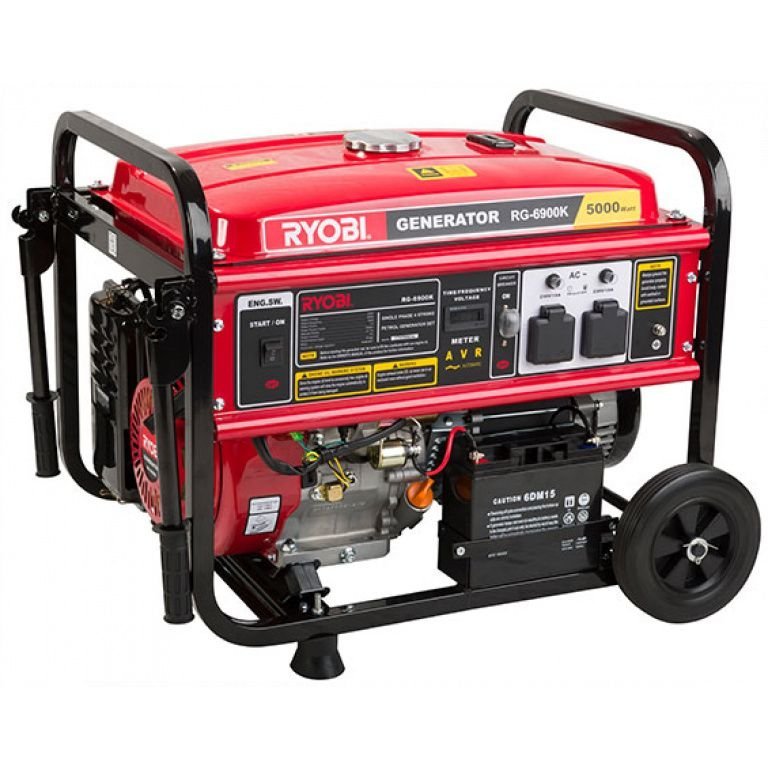
Buying a generator that is too small means tripping it every time the borehole pump starts. Buying one that is far too big wastes money and fuel. The right size comes from a list, a calculator and ten minutes of honest thinking about what really has to run when the power goes.
Step 1: list what must run at the same time
Walk through the house, the shed or the site and write down everything that must keep working during an outage. Be strict: a generator for essentials is far cheaper than one that runs the whole house. A typical essentials list is the fridge and freezer, lights, Wi-Fi and TV, the gate motor, the alarm, and perhaps the borehole pump.
Next to each item write its running power in watts. You will find it on the rating plate or in the manual. As a rough guide, LED lights use 5 to 10 W each, a fridge 150 to 300 W, a TV 100 W, a router 15 W, a gate motor 300 W while moving and a 0.75 kW borehole pump 750 W.
Step 2: allow for start-up surge
Anything with a motor or compressor (pumps, fridges, compressors, aircons, power tools) draws two to three times its running power for a second or two when it starts. A generator has to supply that surge or it will stall or trip. Take the biggest motor on your list, multiply its running watts by three, and use that figure instead of its running watts.
Step 3: add headroom and convert to kVA
Add up the running watts, swap in the biggest surge, then add about 20 percent so the generator is not working flat out. Generators are rated in kVA. For planning, 1 kVA delivers roughly 0.8 kW, so divide your total in kW by 0.8 to get kVA.
Example: fridge 200 W, freezer 200 W, lights 150 W, TV and Wi-Fi 120 W, gate motor 300 W and a 750 W borehole pump. Running total is 1,720 W. Swap the pump’s 750 W for its 2,250 W start-up and the total becomes 3,220 W. Add 20 percent: about 3.9 kW, or roughly 4.8 kVA. A 5 kVA generator is the right size.
Petrol, diesel or inverter generator?
- Petrol generators are lighter and cheaper to buy. They suit occasional load-shedding use at home.
- Diesel generators cost more up front but use less fuel per unit of power and last longer under regular, heavy running. They suit farms, businesses and long outages.
- Inverter generators produce clean, stable power that is safe for laptops and electronics, and they run quieter because the engine slows down when the load is light.
Single phase or three phase?
Homes and most small farms run on single phase power. Choose three phase only if you have three phase motors such as mills, irrigation pumps or workshop machines. A three phase generator can also supply single phase loads, but keep the load balanced across the phases.
Connecting it safely
Never plug a generator into a wall socket to feed the house. A registered electrician must install a changeover switch so the generator and the grid can never be connected at the same time. Back-feeding can kill someone working on the power lines and will damage the generator when the power returns.
Running costs
A small petrol generator at half load typically burns around 1 to 1.5 litres an hour. Multiply that by the hours of outage you expect each month to see the real cost, and compare it with an inverter and battery system, which costs nothing to run once it is paid for. Many households use an inverter for daily load-shedding and keep a generator for long outages.
Quick checklist before you buy
- Running watts of everything on your list, plus the biggest start-up surge, plus 20 percent.
- Fuel type that suits how often you will run it.
- Electric start and an AVR (automatic voltage regulator) for easier use and safer power.
- A changeover switch installed by an electrician.
- Somewhere ventilated to run it: never indoors or in a closed garage.
Browse our single phase generators and three phase generators, or send us your list of appliances and we will help you size one.
Not sure what fits your farm, home or site? Send us your question and we will help you choose.